
May 20, 2026
Mid-May Rain; Still-life of Mom; thoughts about how forests affect the humans who live and work in them; cutting down "trees" with Abby

From the Woods


A soft rain fell on our forest this week—Dad always says this rain is “like a velvet glove.” Over an inch of just-what-the-trees-and-berries-needed fell gently and intermittently over a few days. Julie and I went out for a walk to glory in it. Trailing blackberry blooms, green salmon berries, camas, Columbian wind flower, and goatsbeard/buck’s beard/bride’s feathers said hello.
People Older Than Trees
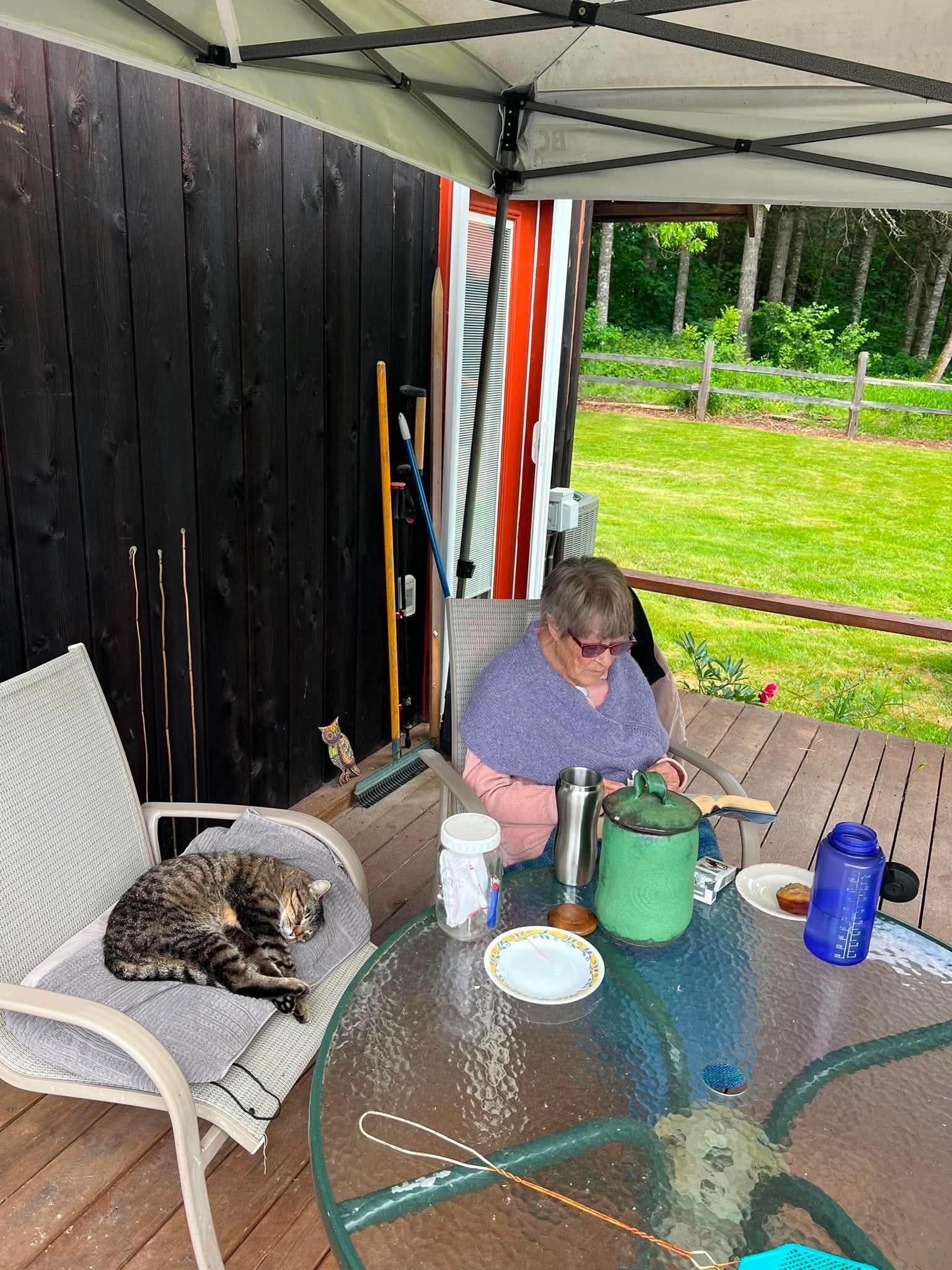
Still-Life with Fae Marie Beck on Her Porch
On the table
fly-swatter
toothpick
jar for lighter and haiku-notepad
coffee
water
muffin-made by Julie
smokes
handmade butt-can
On Mom
100% cotton corduroy button down, made popular by artist Judy Teuful
100% cotton hand-knitted shawl
red glasses adjusted bi-annually to just the right specifications
What Mom’s reading
Our Share of Night by Mariana Enriquez (from the library’s Lucky Day shelves )
Antony and Cleopatra by William Shakespeare (from Mom’s shelves)
The Rain in Portugal: Poems by Billy Collins (a gift from poet Pat Owen)
Rachel Carson at Work by Paul Brooks (from Mom’s shelves)
The Unwomanly Art of War: An Oral History of Women in WWII by Svetlana Alexievich (loaned to Mom by Laurie Trottier)
On the chair
Hero Shima Stinson, the cat Mom tolerates
What I’m Reading/Writing
I was invited to speak at Washington Farm Forestry Association’s annual meeting this last weekend. I talked about how forests make us better humans and our need to share our strengths and wisdom with others. Here a couple excerpts including quotes from essays that gave me good food for thought. (the words in italics are mine)
As society becomes more and more rushed, as we are bombarded with information, as institutions we once trusted seem to fail us, many people are turning to nature as a salve, a solace, as an anchor. They want nature to be stable, to provide stability.
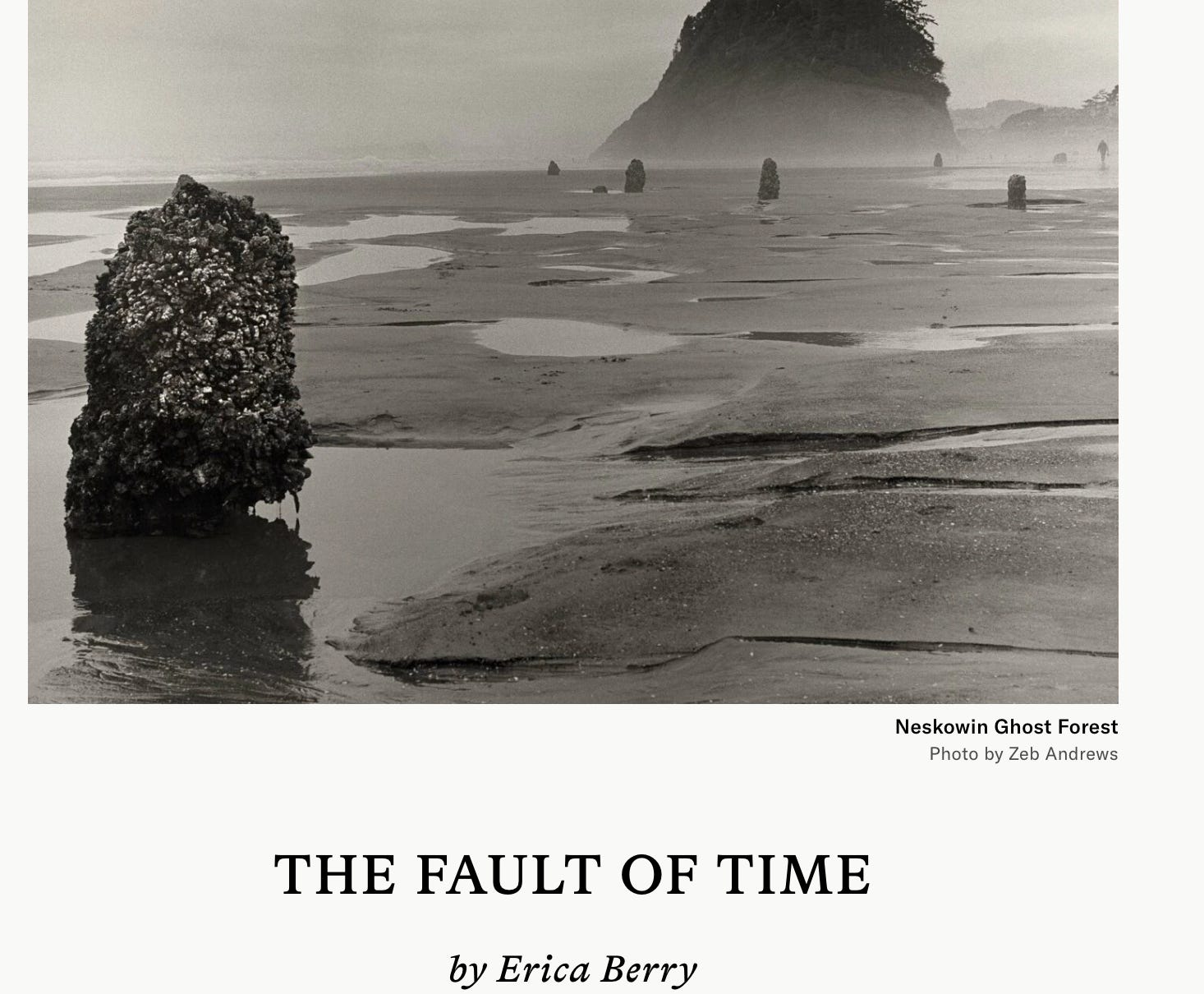
I recently read an essay by Erica Berry that explains this sentiment. In “The Fault of Time,” Berry describes the feelings she had after visiting her grandparents’ forest in California. It is a forest she had visited often as a child during the summer, but this visit came on the heels of a destructive fire. Berry writes,
“Amidst the precarity of human life, I craved a predictable landscape. I felt betrayed when the ecosystem–my seasonal expectation of it–changed. Why did I feel I was owed a stable wilderness, a certain snapshot of the earth? If I first believed it was a product of simple nostalgia, I now think it was a problem of visualizing time.”
When we meet people who are craving a predictable landscape, we need to be gentle with them. The anxiety is real. It is existential. I love that Berry questions her expectations, her feeling of being owed. It gives me hope that other city dwellers (Berry lives in Portland) who see forests only as a place of solace, can understand that while nature can provide solace, nature itself is never stable. This sense of long time, of tree time, is one of our strengths. Like Dad who never walks the same part of the forest twice, we know the forest changes with or without human touch with or without human use. We know nothing is permanent. We can help allay people’s fears.
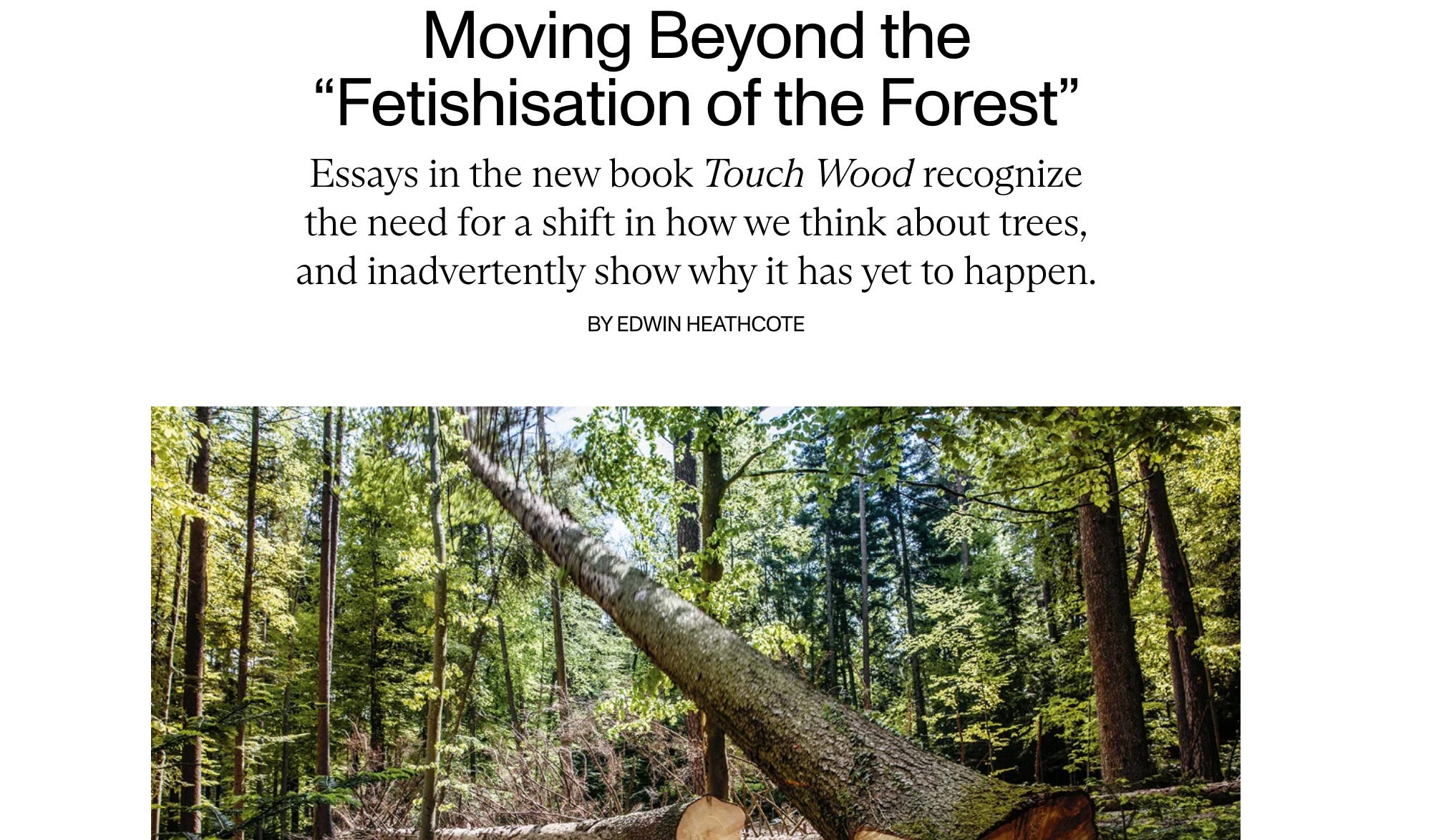
The second quality I want to talk about is our ability to see forests as beautiful AND a source of wood. There are lots of books and articles about the beauty of forests, the grandeur of trees, but almost all of them understand forests only as a place to revere, perhaps to walk through, but not to use. I came across an article titled “Moving Beyond the Fetishisation of the Forest.” The title was intriguing and some of what the author Edwin Heathcote wrote resonated with me:
From forest bathing to forest schools, to foraging as haute cuisine to the kinds of picturesque Covid retreats in the woods that allow the wealthy the space and air to continue living in the city, we have reconceived the woods as a luxury commodity. What was once the setting for dark fairy tales is now the site of real estate fantasy. There is a danger that, in this reverence and commodification, we again distort our relationship with trees.
This felt real to me–I think we all worry that wealthy urbanites want “the West” to only be an outdoor playground–we’ll just import all the food and wood we need. It is hard to not get snarky here, but we must guard against it. We need to tell our story without being defensive.
Heathcote goes on to use some great language to talk about the benefits of wood. He writes:
timber is a remarkable material that is simultaneously dead and alive, one that continues to change, shift, grow, crack, and shrink after it has been felled and sawn, and that rebounds to use and wear by becoming more beautiful. It bears the traces of use in its surface and in its pores and its scent. Unlike almost all other materials, it improves with age. 500-year-old oak beams become like iron (huge, heavy, almost indestructible); a wooden handrail polished by the grip of thousands of people is worn exquisitely smooth.
But then Heathcote spreads another common misconception. He writes:
But what about the future? What about the forests? Timber is renewable, but pine plantations are not forests. They are timber farms, which is something else, more akin to battery farms for hens. They will not save the world or its ecosystems. In fact they are often dead, monocultures of single tree types, devoid of other flora and fauna. The forest, by contrast, is as much about the soil as it is the trees.
Heathcote cannot see a forest AND timber production. He only sees an OR. A forest OR timber production. He cannot smell the fragrance of a Solomon’s Plume then wonder if a commercial thinning of the twenty-five year old stand will be good for the pocketbook and good for the trees. Every family forest is proof that Heathcote’s portrayal of timber production is not only wrong, but damaging. He’s almost with us–he understands the benefits of wood. I don’t think he’s buying the dreaded “tree-free” toilet paper, but he needs to come to one of our forests.
Stumptown
I babysat darling Abby last week. We played endless rounds of Hello Kitty Bingo,
then went outside to our townhouse backyard. Abby said she wanted to “cut down trees.” I said we only do that at the tree farm, not in the city. But she said we’d done it before. I thought for a bit, then remembered she’d helped me prune roses.
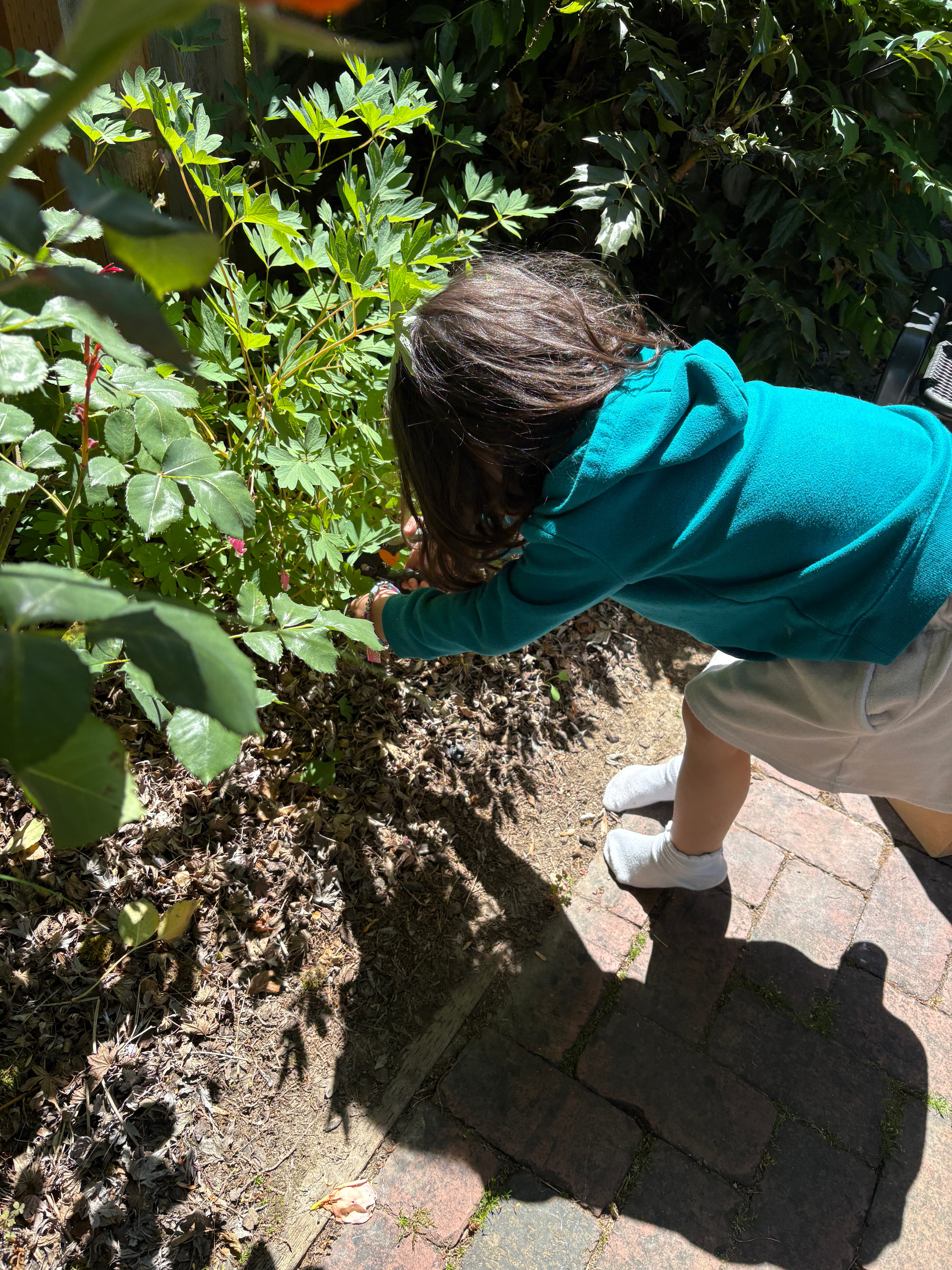
So we “cut down” just-past-their prime roses and the last of the blooming bleeding heart. Abby put her nose in the rose and exclaimed, “it smells like lemon! I want to smell it all day long!”
It took having family with a tree farm for me to fully accept that a forest can be harvested and enjoyed for all of its aesthetic qualities. It doesn’t have to be either/or.
You give me such a beautiful way of looking at the world. It's just what I need with the world the way it is now. And it makes me appreciate the land and nature around me in Michigan.